

Introduction –
Choosing between a dental crown and a filling depends on how much damage your tooth has suffered. If you have a cavity, a dental filling may be enough to restore the tooth. However, if your tooth is badly damaged, cracked or weakened, a dental crown may provide better protection.
Understanding the difference between a dental crown vs filling can help you feel more confident when discussing treatment options with your dentist. Both treatments restore damaged teeth, but they serve different purposes depending on the condition of your tooth.
At Triadent Dental in Ottawa, we help patients understand their restorative dental treatment options and make informed decisions based on their oral health needs.
What Is Dental Filling?
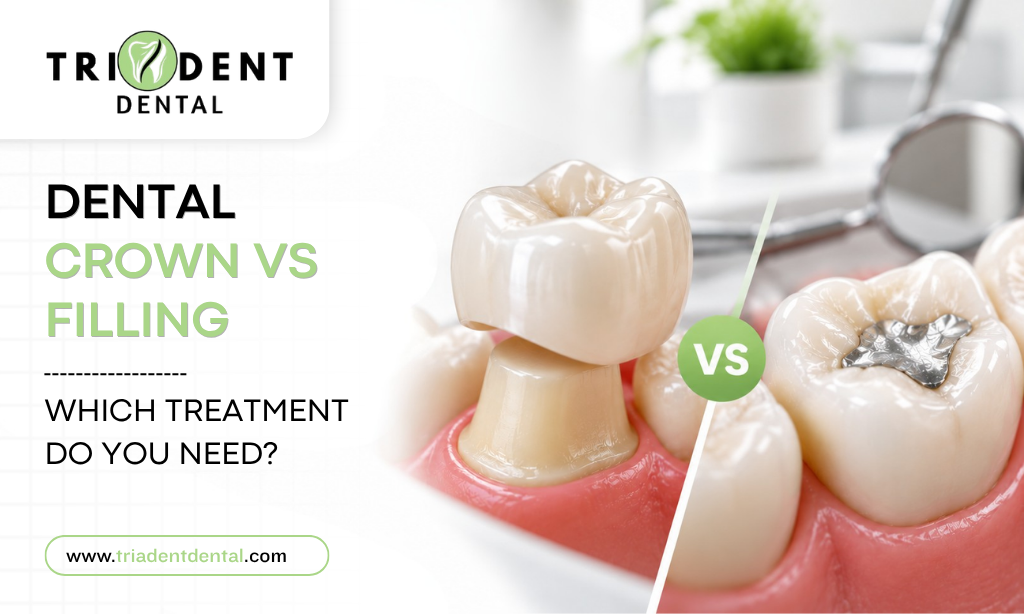
A dental filling is used to repair a tooth affected by decay or minor damage. During treatment, your dentist removes the decayed portion of the tooth and fills the space with a suitable restorative material.
Common filling materials include composite resin, which can be matched to the natural colour of your teeth, and other materials selected according to your dental needs.
When Do You Need a Dental Filling?
Your dentist may recommend a filling if you have:
- A small or moderate cavity.
- Minor tooth damage or wear.
- A small area of decay that needs treatment.
- A damaged existing filling that can be repaired or replaced.
Benefits of Dental Fillings
Dental fillings offer several advantages. They usually require less tooth preparation than crowns, and treatment can often be completed in a single appointment. Tooth-coloured fillings can also blend naturally with your smile.
However, fillings may not provide enough support when a tooth has extensive decay or significant structural damage.
What Is a Dental Crown?
A dental crown is a custom-made restoration that covers the visible portion of a damaged tooth. It helps restore the tooth’s shape, strength and function while protecting the remaining structure.
Crowns can be made from materials such as porcelain, ceramic, metal or a combination of materials. Your dentist will recommend a suitable option based on the tooth’s location, the amount of damage and your individual needs.
When Do You Need a Dental Crown?
A dental crown may be recommended if you have:
- A tooth with extensive decay.
- A cracked or significantly weakened tooth.
- A tooth that has undergone root canal treatment and needs additional protection.
- A large filling with insufficient natural tooth structure remaining.
- A severely worn or broken tooth.
Benefits of Dental Crowns
Dental crowns cover and protect weakened teeth, helping restore normal chewing function. Depending on the material selected, they can also provide a natural-looking appearance.
Although crowns generally require more tooth preparation and a greater investment than fillings, they may be the more appropriate option when a tooth needs substantial reinforcement.
Dental Crown vs Filling: What Is the Difference?
The main difference between a dental crown and a filling is how much of the tooth they restore and protect.
Dental filling: Repairs a specific area of decay or minor damage while preserving more of the natural tooth.
Dental crown: Covers the visible portion of the tooth to restore its shape and provide support when the tooth is significantly weakened.
Other important differences include:
- Treatment time: Fillings are often completed in one appointment. Crowns may require more than one visit, depending on the procedure and available technology.
- Tooth preparation: Fillings generally require less removal of healthy tooth structure. Crowns usually require reshaping the tooth so the restoration fits properly.
- Cost: Fillings generally cost less than crowns, although the actual price depends on the tooth, material, complexity and dental practice.
- Durability: Both treatments can last for years with proper care. Their lifespan depends on factors such as oral hygiene, bite pressure, material and the extent of the original damage.
Dental Crown vs Filling: Which Is Better for Your Tooth?
Neither treatment is automatically better than the other. The right choice depends on the amount of healthy tooth structure remaining and the location and severity of the damage.
A filling may be suitable if your cavity is small and the tooth remains strong. A crown may be more appropriate if extensive decay, a large existing filling or a fracture has weakened the tooth.
For example, if you have a small cavity that has not significantly weakened your tooth, a filling may restore its function without unnecessary tooth preparation. However, if a large portion of your tooth is damaged, a crown may provide the additional support needed.
Your dentist will examine the tooth and may recommend dental X-rays when appropriate to assess the extent of the problem.
How Much Does a Dental Crown or Filling Cost in Ottawa?
The cost of a dental filling or crown in Ottawa varies depending on the treatment required, the material used, the size of the restoration and the complexity of your case.
Fillings are generally more affordable because they repair a smaller area of the tooth. Crowns usually cost more because they require a custom restoration and additional preparation.
The most suitable treatment cannot be determined by price alone. Choosing a filling when a tooth needs more protection may lead to further damage, while placing a crown on a tooth that could be treated conservatively may involve unnecessary treatment.
At Triadent Dental, the recommended treatment and associated costs can be discussed after an examination. If you have dental coverage, ask your insurance provider about eligibility and coverage limits before beginning treatment.
How Can You Make Your Filling or Crown Last Longer?
Good oral hygiene can help protect both natural teeth and dental restorations.
Follow these simple tips:
- Brush twice daily with fluoride toothpaste.
- Clean between your teeth every day using floss or another suitable interdental cleaner.
- Limit frequent sugary snacks and drinks.
- Avoid chewing ice and other very hard objects.
- Attend regular dental examinations and professional cleanings.
- Tell your dentist if you grind your teeth or notice discomfort when biting.
If a filling or crown becomes loose, cracks or causes persistent pain, arrange a dental examination rather than attempting to repair it yourself.
Get the Right Restorative Dental Treatment at Triadent Dental
If you are unsure whether you need a dental crown or filling, Triadent Dental can help you understand your options. Our team provides restorative dental care in Ottawa, with treatment recommendations based on the condition of your teeth and your individual needs.
Whether you have a cavity, a damaged filling or a weakened tooth, an examination can help determine the most appropriate way to restore your tooth’s function and protect your oral health.
Learn more about our restorative and aesthetic dental treatments or book an appointment with Triadent Dental.
Frequently Asked Questions
1. Is a dental crown better than a filling?
A crown may be better for a severely damaged or weakened tooth, while a filling is often sufficient for a smaller cavity. Your dentist will recommend treatment based on the amount of healthy tooth structure remaining.
2. Can a large cavity be treated with a filling?
Some larger cavities can be treated with a filling, but extensive decay may leave the tooth too weak to withstand normal chewing pressure. In such cases, a crown or another restorative option may be recommended.
3. How long do dental crowns and fillings last?
Both can last for years. Their lifespan depends on the materials used, oral hygiene, chewing forces and the condition of the tooth. Regular dental checkups help identify problems early.
4. Does getting a dental crown hurt?
The procedure is generally performed using local anaesthesia to reduce discomfort. Some sensitivity or soreness may occur afterward, but persistent or severe pain should be assessed by your dentist.
5. Can I replace an old filling with a dental crown?
Yes. If an old filling is large or the tooth has become weakened, your dentist may recommend replacing the restoration with a crown. However, the decision depends on the tooth’s condition and whether sufficient healthy structure remains.

